
When people ask how to learn digital marketing, most guides tell them to watch YouTube videos, take a few free courses and apply for jobs. That advice was mediocre before 2023. In 2026, it is significantly inadequate.
The field has changed significantly. How to learn digital marketing effectively is a different question in 2026 than it was in 2022. AI tools have raised the baseline expectation for what a practising digital marketer can produce. Google’s AI Overviews and AI Mode have changed how SEO works. Performance Max has replaced much of the manual Google Ads management that dominated training content until two years ago. Learning digital marketing in 2026 means learning what the industry actually looks like — not what it looked like when most online tutorials were recorded.
This guide gives you a practical, honest roadmap: what to learn, in what order, using which resources, with which tools, avoiding which mistakes. It is written for someone starting from zero who wants to arrive at genuine, employable proficiency — not just a handful of certificates with no practical skill behind them.
Direct answer: To learn digital marketing effectively in 2026, follow a structured roadmap — starting with SEO and analytics fundamentals, building through paid advertising and AI tools, and ensuring every stage includes practice on real campaigns rather than demo accounts.
How to Learn Digital Marketing — The Right Way
There are two ways to approach how to learn digital marketing. The first is to collect resources — YouTube videos, free courses, blog posts, certifications — and work through them sequentially, hoping the knowledge organises itself into practical capability. The second is to follow a structured learning path where concept, demonstration and real practice are integrated from the beginning.
The first approach is how most beginners start. It is not without value — a lot of good free content exists. But it has a predictable failure mode: people who learn this way typically develop broad conceptual knowledge without the specific technical proficiency that employers and clients actually pay for. They can talk about digital marketing better than they can do it.
The second approach — structured learning with real campaign access — produces faster, deeper practical ability. It is also how you build the portfolio of documented results that makes the difference in job applications and client conversations.
- Learn the concept — understand why a technique works, not just what it is
- See it demonstrated — on real tools, real accounts, real data
- Do it yourself — on an actual website or campaign with real consequences
- Measure the outcome — check whether what you did had the expected effect
- Document the result — build your portfolio from real work, not course completions
Every section of this guide will point back to this sequence. The specific channels and tools change; the learning method should not.
What is Digital Marketing?
Digital marketing is the practice of promoting products, services or brands through online channels — search engines, social media platforms, email, paid advertising, websites and AI-powered search interfaces. It covers both organic channels (free, long-term, effort-intensive) and paid channels (immediate, flexible, cost-dependent).
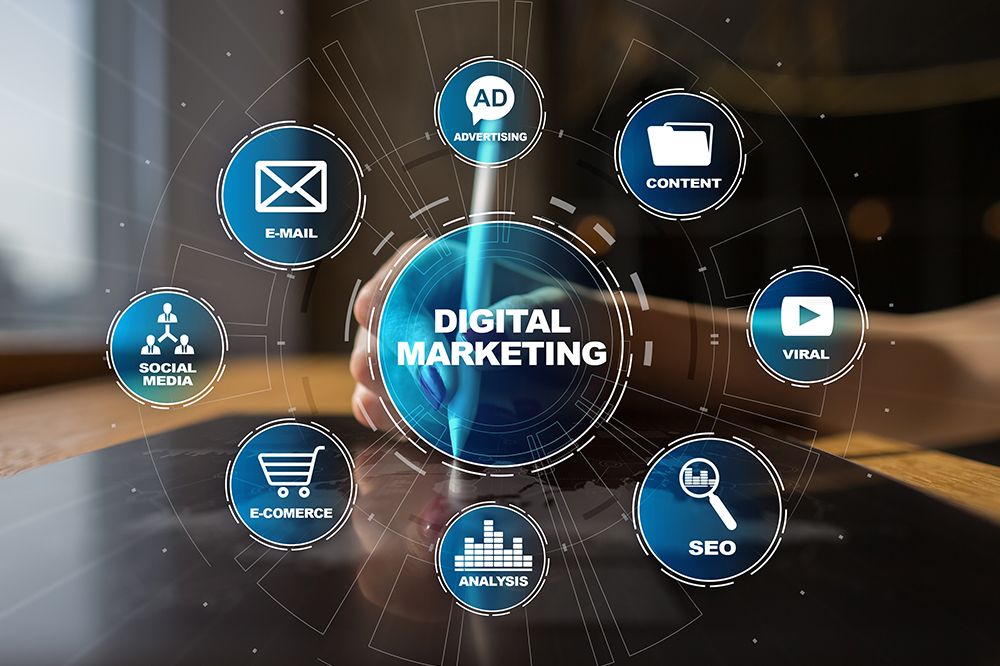
The discipline spans multiple specialisations: SEO, Google Ads, Meta Ads, email marketing, content marketing, performance marketing, AI marketing and marketing automation. Most digital marketers start with one or two channels and develop a wider range of skills over time.
For a comprehensive introduction to the field, see our full guide at What is Digital Marketing?
Key distinction: Digital marketing is not social media management. Social media is one of 12+ channels. Treating them as the same is one of the most common and costly misunderstandings beginners carry into the field.
Why Learn Digital Marketing in 2026?
AI Has Created New Skill Gaps
AI tools have changed the production side of digital marketing dramatically. ChatGPT, Claude and Gemini accelerate content creation. Google’s Performance Max uses AI to optimise ad delivery. Canva AI creates professional graphics in seconds. For practitioners who know how to work with these tools, productivity has increased substantially. For practitioners who do not, the gap between what they can deliver and what is expected has grown equally substantially.
Learning digital marketing in 2026 means learning to work with AI from the start — not as an advanced topic to be addressed later, but as a foundational workflow component. This is actually an advantage for beginners: you are not unlearning old habits, you are building new ones correctly from the beginning.
Jobs and Freelancing Demand Is Strong
Demand for skilled digital marketing professionals consistently outpaces supply in India and internationally. The shortage is most acute in technical specialisations: Google Ads with proper GA4 attribution, SEO with AI Overviews understanding, and AI marketing as a distinct practice. Beginners who develop genuine technical proficiency in these areas enter a market where employers and clients are actively competing for capable practitioners.
Online Business Has Gone Mainstream
India now has hundreds of thousands of businesses actively investing in digital marketing — across manufacturing, education, healthcare, e-commerce, D2C, professional services and more. Every new business that goes online creates demand for digital marketing support. The addressable market for digital marketing skills keeps expanding.
Freelancing and Entrepreneurship
Digital marketing is one of the most accessible paths to freelance income. A practitioner with established SEO and Google Ads skills can serve clients from any location with a laptop and internet connection. International clients from the UK, US, Australia and UAE pay in foreign currency, creating income levels that compare favourably to salaried employment. Building an agency from a freelance base is a well-trodden path in the field.
Understand the full scope — Digital Marketing Scope in India
Who Should Learn Digital Marketing?
Students
For students from any academic stream, understanding how to learn digital marketing — commerce, arts, science, engineering — digital marketing is one of the most practical skills available. The field values demonstrable results over academic credentials. Six months of structured training with real project work positions most students for employment at a level that takes longer to reach in many other fields.
Freshers and Recent Graduates
Freshers who add structured digital marketing training to their existing degree — regardless of what that degree is in — have a stronger employment profile than those who rely on their academic background alone. Digital marketing is skills-based. What you can do matters more than what you have studied.
Housewives and Returning Professionals
Digital marketing is genuinely flexible in a way few professional skills are. Learning can happen at your own pace. Work can be done remotely with self-managed hours. A freelance practice can be built gradually alongside other responsibilities. Several independent digital marketing consultants in India have built significant practices through this exact route.
Business Owners
Business owners who understand digital marketing make better decisions about where to invest, what agencies to hire and how to evaluate whether their marketing is working. Even if you intend to continue using external support, knowing what good looks like — what results are reasonable, what questions to ask, what red flags indicate poor work — is independently valuable.
Working Professionals
Career switchers and professionals looking to upgrade their skillset find digital marketing accessible because the field does not require you to abandon your previous experience. A background in sales helps with understanding customer intent. An engineering background helps with technical SEO and analytics. A finance background helps with performance marketing accountability. Whatever you bring, there is a digital marketing specialisation where it is an asset.
Freelancers Adding Services
Freelancers who currently offer graphic design, content writing, or web development find that adding digital marketing skills — particularly SEO and paid advertising — expands both the scope of clients they can serve and the monthly retainers they can command. The step from ‘I write content’ to ‘I run your full content and SEO programme’ is a significant billing increase.
Career in Digital Marketing: Salary, Skills, and Scope
Complete Learning Roadmap — Month by Month
Below is a six-month structured learning roadmap for someone starting from zero. The sequence is deliberate — each stage builds on the previous one. Adjust the pace based on how much time you can dedicate, but maintain the order.
| Month | Focus Area | What to Learn | Goal by End |
| 1 | SEO Fundamentals | Keyword research, on-page SEO, Google Search Console | Audit one real website |
| 2 | Google Ads Basics | Campaign structure, match types, Quality Score, GA4 | Run a small test campaign |
| 3 | Meta Ads + Social | Ad manager, audiences, Reels, organic social | Complete Meta Blueprint certification |
| 4 | Content + Email | AI-assisted writing, content clusters, Mailchimp basics | Publish 5 SEO-optimised articles |
| 5 | Analytics + GTM | GA4 Explorations, event tracking, GTM setup | Set up GA4 + GTM on a live site |
| 6 | AI Tools + Portfolio | ChatGPT, Claude, Gemini workflows, case study building | Document 2–3 real project results |
Month 1 — SEO Fundamentals
In the context of how to learn digital marketing, start with SEO — it builds foundational understanding of how people search for information online, how search engines evaluate content, and how website decisions affect visibility. These mental models carry over into every other channel you learn later.
Practical month 1 work: Conduct a keyword research exercise for a real or hypothetical business. Optimise one page on an existing website (or a test site you create). Set up Google Search Console. Write one piece of content designed to rank for a specific keyword and explain why you structured it the way you did.
Month 2 — Google Ads
Google Ads teaches you about search intent — why people type specific queries and what they are looking for when they do. This understanding reinforces and extends your SEO knowledge. It also introduces you to measurement: Quality Score, click-through rate, conversion rate, and the connection between campaign structure and performance.
Practical month 2 work: Build a search campaign from scratch in Google Ads. Define a conversion action, set up tracking, and run the campaign with a real or minimal budget. Review the data after one week and explain what it tells you.
Month 3 — Meta Ads and Social Media
Meta Ads — Facebook and Instagram advertising — introduces a fundamentally different type of targeting: you are reaching people based on who they are and what they are interested in, not what they are searching for. This is demand creation rather than demand capture. Understanding the difference is essential for planning multi-channel strategies.
Practical month 3 work: Complete Meta Blueprint certification. Create a Meta Ads campaign with at least two ad sets testing different audiences. Document what the results tell you about which audience performed better and why.
Month 4 — Content Marketing and Email
Content marketing and email marketing both serve the same purpose from different angles: building relationships with audiences over time, providing value before asking for commitment, and nurturing people from interest to conversion. In 2026, AI tools are integral to both — but quality control is where the human role is irreplaceable.
Practical month 4 work: Plan and publish five pieces of SEO-optimised content for a real or test site. Set up a basic email drip sequence in Mailchimp or HubSpot. Use ChatGPT or Claude to draft one piece and document how you edited it for quality and originality.
Month 5 — GA4 and Google Tag Manager
GA4 and GTM are where digital marketing becomes measurable and therefore accountable. Most digital marketing training underweights this stage — and it shows in interviews and on the job. Being able to set up tracking, build custom reports and interpret what the data means for decision-making is the skill that most separates strong candidates from average ones.
Practical month 5 work: Implement GA4 with custom event tracking on a live website using GTM. Build a Looker Studio dashboard connecting GA4 and Google Ads data. Write a one-page interpretation of what the data shows about what is working and what is not.
Month 6 — AI Tools and Portfolio
Month 6 is about consolidating what you have learned, integrating AI tools into your workflow, and building the portfolio documentation that will support job applications and client conversations. This is also when you should apply for internships, freelance your first client, or start interviewing for employment.
Practical month 6 work: Document two or three real projects with specific outcomes — rankings achieved, cost per lead, engagement growth, traffic increase. Build an AI-assisted content workflow and document the process. Apply for at least three roles or approach three potential clients.
Learn with live project access from month 1 — Digital Marketing Course in Chandigarh
Best Skills to Learn First
If you are thinking about how to learn digital marketing efficiently and have limited time before anything else, here is a ranked order based on employment demand, salary impact and foundational importance:
SEO — Search Engine Optimisation
SEO is the foundation. It teaches you how search works, how content quality is evaluated, and how to structure digital information for human readability and algorithmic understanding. Everything else in digital marketing connects back to these fundamentals. In 2026, SEO also now includes AI SEO — understanding how Google’s AI Overviews and AI Mode treat content, and how to structure pages for AI system readability.
Learn SEO with practical training — SEO Course
Google Ads — Paid Search
Google Ads skills are in high demand and directly linked to business revenue. Learning Google Ads early means understanding search intent deeply, measuring results precisely, and making decisions with financial accountability. In 2026, this means learning Smart Bidding and Performance Max rather than primarily manual campaign management.
Master Google Ads with AI — Google Ads Course
GA4 — Google Analytics 4
Analytics proficiency is consistently one of the most under-developed skills in candidates and one of the most valued by employers. Knowing how to set up GA4 correctly, build Exploration reports, configure conversion tracking and connect data to Google Ads gives you a measurable advantage in most hiring situations.
AI Tool Proficiency
ChatGPT, Claude and Gemini are no longer optional. Learning to use them effectively — not just opening them and typing prompts, but building workflows that produce consistently useful output — is a 2026 baseline competency. The additional value comes from knowing when AI output needs editing and how to edit it for quality, accuracy and E-E-A-T compliance.
Meta Ads
Meta advertising — Facebook and Instagram — is one of the most widely used paid channels for Indian businesses. Understanding campaign objectives, Advantage+ targeting, creative testing and Meta Conversions API for proper tracking makes you employable across a wide range of agency and in-house roles.
Copywriting
The ability to write clear, specific, audience-appropriate copy — ad headlines, email subject lines, landing page content, social captions — is used in every digital marketing channel. It is learnable, and improving at it directly improves the performance of every campaign you run.
Master in-demand digital marketing skills
Best Digital Marketing Tools for Beginners
You do not need to buy all of these tools to learn digital marketing. Many are free. The ones that cost money are usually available through your training institute or employer. What matters is that you understand what each tool does and why it matters — so you can use any of them when access is provided.
| Tool | Category | Why Beginners Should Learn It |
| Google Ads | Paid Advertising | Essential for any paid marketing role — manage search, display, shopping campaigns |
| GA4 (Google Analytics 4) | Analytics | Standard measurement tool — every employer expects GA4 proficiency |
| Google Tag Manager | Tracking | Implement tracking without code — saves dependency on developers |
| Google Search Console | SEO | Free SEO data — rankings, clicks, indexing issues, Core Web Vitals |
| Semrush | SEO + Research | Keyword research, competitor analysis, site audit — industry standard |
| Ahrefs | SEO + Backlinks | Backlink analysis, content gap identification, rank tracking |
| Canva | Design | Create professional graphics without a design background |
| ChatGPT | AI Content | Draft content, ad copy, research summaries, email sequences |
| Claude | AI Writing | Long-form content, editing, structured writing for E-E-A-T compliance |
| Gemini | AI + Google | Research, integrated with Google tools, real-time data |
| Perplexity | AI Research | Cited research tool — great for finding current data with sources |
| Looker Studio | Reporting | Build visual dashboards from GA4, Ads and Search Console data |
Start with the free tools — Google Ads, GA4, Search Console, Google Tag Manager. These are the ones you will encounter most often in employment and freelancing. The others (Semrush, Ahrefs) can be explored through free trials or institute access.
Learn AI tools in practice — Digital Marketing Tools
Free vs Paid Learning — What Works Better?
There is no single right answer when deciding how to learn digital marketing — free versus paid depends on your goals. The right choice depends on your goals, your timeline, your access to real campaign environments, and how much structure you need. Here is an honest comparison:
| Learning Path | Cost | What You Get | Best For |
| YouTube (free) | Free | Conceptual understanding, tutorials | Supplementing structured training |
| Google Skillshop | Free | Platform certifications, Google Ads + GA4 | Validating Google tool knowledge |
| HubSpot Academy | Free | Content, email, inbound certifications | Content and CRM learning |
| Meta Blueprint | Free | Facebook + Instagram Ads certifications | Meta Ads platform knowledge |
| Semrush Academy | Free | SEO certifications, tool-specific learning | SEO tool proficiency |
| Online Courses (Udemy) | INR 500–5,000 | Structured video content, one topic at a time | Self-paced topic-by-topic study |
| Company-Based Institute | INR 30K–1.5L | Real campaign access, live tools, placement support | Fastest path to employment or freelancing |
When Free Learning Works Well?
Free resources — YouTube, Google Skillshop, Meta Blueprint, HubSpot Academy — are excellent for building conceptual understanding, earning platform certifications, and supplementing structured training. If you have strong self-discipline, can create your own practical exercises (even a personal website to optimise), and are not in a hurry to be job-ready, self-directed learning from free resources is viable.
When Paid or Structured Learning Works Better?
The primary limitation of free learning for digital marketing is access to real campaign environments. Demo accounts and simulated data do not teach you the same things that real campaigns do. The difference between watching a video about Quality Score and watching your own campaign’s Quality Score change in response to something you changed is significant — and it is the latter experience that builds practical proficiency.
Company-based training programmes — where you learn inside an active digital marketing company — close this gap by providing real campaign access from day one. The additional cost reflects the access you are getting: real tools, real data, real feedback, and often placement support that a YouTube education cannot offer.
The Most Common Mistake
Spending 12 months collecting free resources and certificates, then arriving at job applications with no portfolio of real work. Employers can tell the difference between a candidate who has watched 200 hours of YouTube about digital marketing and a candidate who has actually managed campaigns. The portfolio — documented results from real work — is what creates the difference.
Real campaign access from day 1 — Digital Marketing Course in Patiala
Certifications Worth Having
Certifications add credibility and demonstrate platform knowledge. They work best in combination with practical experience — a certified candidate who can answer technical follow-up questions is significantly more compelling than one who cannot. Here are the certifications worth pursuing and why:
Google Skillshop Certifications
Google Ads certifications (Search, Display, Shopping, Video, Performance Max) and the Google Analytics certification are the most universally recognised in the industry. They are free, regularly updated, and closely aligned with the tools you will actually use. Start with Google Ads Search and GA4 — these are the most frequently requested by employers.
Meta Blueprint
Meta’s certification programme covers Facebook and Instagram advertising across campaign planning, creative strategy, and measurement. The Meta Certified Digital Marketing Associate certification is a reasonable starting point. More advanced certifications are available for paid media specialists. Free to pursue through the Meta Blueprint platform.
HubSpot Academy
HubSpot certifications in Content Marketing, Email Marketing, Inbound Marketing and Social Media Marketing are well-regarded and free. They complement technical platform certifications well by building the strategic and channel-level thinking that pure platform training does not cover.
Semrush Certifications
Semrush’s certification programme covers SEO fundamentals, content marketing and competitive research. Particularly useful for building and demonstrating SEO conceptual knowledge. Free through the Semrush Academy platform.
1313 Digital Marketing Institute Certificate
1313 DMI’s Digital Marketing Professional Certificate documents completion of structured training at a company-based institute with live project work. This kind of programme certificate, combined with documented case studies from real campaigns, is the most practical credential for employment purposes.
A complete certification stack for a job-ready digital marketer: Google Ads Search + GA4 + Meta Blueprint + HubSpot Content Marketing + one Semrush certification. This combination demonstrates both platform knowledge and strategic understanding.
Why Live Projects Matter More Than Theory?
Every training programme that is serious about employment outcomes offers some form of live project access. The question worth asking is: what does ‘live project’ actually mean in that specific programme?
A live project on a test website that gets no traffic teaches you the mechanics of SEO — how to add a meta description, how to structure a heading. It does not teach you how SEO behaves in a competitive market, how long changes take to show in rankings, or how to diagnose why expected improvements did not materialise.
A live project on a real client website — with actual traffic, real rankings, and business consequences if something goes wrong — teaches all of that. The diagnostic thinking that develops from troubleshooting real problems is what makes the difference between a practitioner who can follow instructions and one who can think independently.
- Real campaign access builds portfolio material that is verifiable — employers can check the actual results
- Real consequences teach faster than simulated ones — the urgency of a client’s underperforming campaign focuses attention in a way no exercise can replicate
- Real data is messier, more complex and more instructive than demo account data
- Real tools in a real company environment prepare you for the professional context you are about to enter
- Real campaign work, documented with specific outcomes, is the strongest asset in any job interview or client conversation
When evaluating any training programme, ask specifically: which real websites or accounts will I work on? Can I see examples of what previous students documented from their project work? What happens if I make a mistake on a live account? How that question is answered tells you a great deal about what the programme actually provides.
Common Beginner Mistakes
Knowing which mistakes to avoid is part of understanding how to learn digital marketing effectively. Here are the most consistent patterns observed in beginners who struggle to become employable:
| Common Beginner Mistake | What to Do Instead |
| Trying to learn everything at once | Pick one channel, go deep, get results, then expand |
| Collecting certificates without practical work | Every certificate should be backed by hands-on campaign work |
| Learning on demo or simulated accounts | Insist on real campaign access — consequences teach faster than theory |
| Avoiding analytics because it seems hard | GA4 proficiency is the skill that differentiates most strongly in interviews |
| Treating content writing and content marketing as the same | Content marketing is strategy + production + distribution + measurement |
| Ignoring AI tools as ‘optional’ | AI tool proficiency is a baseline expectation in 2026 — start now |
| Measuring success by traffic, not outcomes | Employers and clients care about leads, sales and ROAS — not sessions alone |
| Waiting until you feel ready before applying | Apply when you have foundational skills — the rest develops on the job |
AI and the Future of Learning Digital Marketing
AI has changed how to learn digital marketing — it has changed what you need to learn — and how you learn it — more than any other development in digital marketing in the past decade. Ignoring it during your training is the same as someone learning marketing in 2010 and ignoring social media.
AI Tools Are Now Core Curriculum
ChatGPT, Claude, Gemini and Canva AI are workflow tools, not add-ons. Learning to use them effectively — writing briefs that produce genuinely useful output, editing AI drafts for accuracy and originality, building AI-assisted content workflows — should be part of your training from month one, not module twelve.
Google AI Overviews and AI Mode
Google’s AI Overviews now appear at the top of many search results, synthesising information from multiple sources. Content that appears in AI Overviews tends to be clearly structured, factually grounded and specifically responsive to the query. Learning how to write content that meets these criteria — direct answers early, proper heading structure, schema markup — is now a core SEO skill, not an advanced topic.
AEO — Answer Engine Optimisation
AEO is the practice of structuring content to appear in AI-generated answers — ChatGPT responses, Perplexity summaries, Google featured snippets and voice assistant answers. When someone asks an AI tool ‘how do I learn digital marketing’, content that practises AEO is more likely to appear in that answer. The techniques overlap with strong SEO practice: direct answers, FAQ structure, schema markup, clear definitions.
GEO — Generative Engine Optimisation
GEO focuses on improving the likelihood that generative AI tools cite or recommend your content. Research from 2024 identified patterns in content that is frequently cited by AI systems: sourced statistics, expert quotations, clear definitions and comprehensive topic coverage from an identifiable source. As you learn content marketing, building these qualities into everything you produce positions you well for both traditional search and AI-assisted discovery.
Perplexity as a Learning Tool
Perplexity is worth using as part of your own learning process. It provides cited, current information that can help you stay current with algorithm changes, platform updates and industry developments — which is particularly useful when the topic moves faster than most tutorials can keep pace with.
What AI Cannot Replace in Your Learning
AI can draft content, analyse data patterns, suggest campaign structures and answer specific questions. It cannot develop the judgment that comes from troubleshooting a real campaign problem under time pressure. It cannot replicate the feedback loop of making a change on a real website and observing what happens over the following weeks. Also, it cannot substitute for the experience of managing a client’s expectation when results are slower than hoped. These are the things that make a digital marketer genuinely capable — and they require real practice, not AI assistance.
How Long Does It Take to Learn Digital Marketing?
The honest answer is that it depends on what you mean by ‘learn’. Conceptual familiarity — knowing what the channels are, understanding the terminology, passing platform certifications — can be achieved in weeks. Practical proficiency — the ability to set up and manage campaigns that produce measurable results — takes longer, and is shaped heavily by the quality of your practical experience.
| Learning Approach | Time to Job-Ready | What Shapes the Timeline |
| Self-study only (YouTube + free courses) | 9–18 months | No structure, no feedback, no real project access |
| Online courses (Udemy / paid platforms) | 6–12 months | Better structure but still limited by demo accounts |
| Certification programmes (Google, Meta, HubSpot) | 3–6 months (for certs alone) | Proves knowledge — doesn’t prove hands-on ability |
| Company-based institute with live projects | 3–6 months | Real campaign access, faster feedback, portfolio ready |
| Internship at a digital marketing agency | 3–4 months (if fully engaged) | Real client work, feedback, accountability |
The most important variable in the timeline is not how many hours you study — it is whether you are practising on real campaigns or simulated ones. A beginner who spends three months working on real SEO campaigns for a small local business will develop more practical proficiency than someone who spends six months on free courses with demo accounts.
Practical benchmark: You are learning digital marketing effectively when you can explain what changed in a campaign and why the results changed the way they did — not just what the metrics show. That level of understanding typically develops 2–4 months into structured training with real project access.
Career Opportunities After Learning Digital Marketing
Once you have developed practical digital marketing skills and built a portfolio of documented results, several career paths open up — not one. Here is what is available:
Employment
SEO executive, Google Ads specialist, performance marketing executive, social media manager, content marketing specialist, email marketing executive, AI marketing specialist, digital marketing executive. Entry-level roles typically start at INR 2–3.5 LPA depending on role, city and demonstrated results. For detailed salary data, see /digital-marketing-salary-in-india.
Freelancing
Digital marketing is one of the most freelance-friendly professions. Starting with two or three small Indian clients and building toward international retainers is the typical path. Experienced freelancers with established international client bases earn INR 1.5–5 lakh per month. The timeline from training to first freelance client is typically 3–6 months with structured learning.
Business and Entrepreneurship
Starting a digital marketing agency, building affiliate income through SEO content, creating and monetising a YouTube channel or newsletter in a niche, or offering digital marketing consulting to businesses in a specific industry — these are all accessible paths that build directly on the skills learned during training.
For Business Owners
Business owners who learn digital marketing typically report two things: they get better results from their marketing because they understand what it should do, and they get better value from agencies and freelancers because they know what questions to ask. Understanding how to learn digital marketing as a business owner is not about becoming a practitioner — it is about becoming an informed buyer and director of marketing activity.
Is digital marketing the right career choice? — Is Digital Marketing a Good Career?
Frequently Asked Questions
How do I start learning digital marketing as a beginner?
Start with SEO fundamentals — they build the mental model for how online information works and is found. Then add Google Ads for search intent understanding, GA4 for measurement, and AI tools for workflow efficiency. Use free resources (Google Skillshop, HubSpot Academy) for certifications, but prioritise any learning path that gives you access to real campaign environments rather than demo accounts.
How long does it take to learn digital marketing?
Conceptual familiarity takes weeks. Practical proficiency — the ability to manage campaigns that produce measurable results — takes 3–6 months with structured training and real project access. Self-study from free resources alone typically takes 9–18 months to reach the same level, if it gets there at all. The key variable is access to real campaigns, not total study hours.
Can I learn digital marketing for free?
You can learn the concepts and earn platform certifications for free through Google Skillshop, Meta Blueprint, HubSpot Academy and Semrush. Free resources do not typically provide access to real campaign environments, which is where practical proficiency develops. The most effective approach combines free certifications with structured training that includes live project access.
Is digital marketing hard to learn?
Digital marketing is broad but not technically complex in the same way software engineering is. The learning curve is manageable for anyone willing to be systematic. The part most people find challenging is not the concepts but the practical application — understanding why a campaign is underperforming requires real diagnostic experience that classroom study alone does not provide.
Which digital marketing skill should I learn first?
SEO — because it builds foundational understanding of how search works, how content quality is evaluated, and how digital information is structured for discovery. These mental models apply to every other channel in digital marketing. Google Ads is the second most important to learn early, followed by GA4 for analytics proficiency.
Do I need a degree to learn digital marketing?
No. Digital marketing hiring decisions are based on demonstrated skills, certifications and portfolio results — not academic qualifications. A structured training programme with real project access, combined with relevant certifications, positions a beginner for employment more effectively than most degrees without practical work to back them up.
What certifications should I get for digital marketing?
Prioritise: Google Ads Search (Google Skillshop), Google Analytics GA4 (Google Skillshop), Meta Certified Digital Marketing Associate (Meta Blueprint), and HubSpot Content Marketing. This combination demonstrates both platform knowledge and strategic understanding. Add Semrush certifications as you develop SEO skills.
Can I learn digital marketing without a laptop?
A laptop is strongly recommended. Digital marketing involves working across multiple browser windows simultaneously — campaign manager, analytics, keyword tools, content documents. A smartphone is adequate for consuming learning content but insufficient for practising the actual work. If budget is a constraint, a basic secondhand laptop is a worthwhile investment before starting formal training.
How do I build a digital marketing portfolio with no experience?
The answer to how to learn digital marketing is: build a portfolio from real work. Optimise a real website (even your own), run a small Google Ads campaign with a minimal budget, manage social media for a local business, or produce SEO content that actually ranks. The key is documenting the outcome — before-and-after screenshots, traffic data, conversion metrics — not just describing the activities. Training programmes with live project access accelerate this significantly.
What is the difference between learning SEO and learning digital marketing?
SEO is one channel within digital marketing. Learning SEO means learning how to improve organic search visibility through keyword research, on-page optimisation, technical SEO and link building. Learning digital marketing broadly means understanding SEO plus paid advertising, social media, email, content, analytics, AI tools and strategy across all channels. SEO is a strong starting point; the full discipline builds from there.
Is it worth learning Google Ads as a beginner?
Yes — especially in 2026. Google Ads skills are in consistent demand, directly tied to business revenue, and measurable in ways that make your work’s value clear. Learning Google Ads also deepens your understanding of search intent and measurement, which makes you better at every other digital marketing channel. The shift to Performance Max and Smart Bidding means the skill is evolving — but that creates opportunity for those who learn the current state of the platform.
How do AI tools change how I should learn digital marketing?
AI tools change what you need to produce, not whether you need to understand the underlying discipline. You still need to understand what good SEO content looks like to edit AI-drafted content effectively. You still need to understand conversion tracking to interpret GA4 data regardless of what AI generates around it. Learn the fundamentals of each channel, then learn to use AI tools to do the work more efficiently. The discipline first, the tools second.
What is the best digital marketing course for beginners in India?
The best course for beginners provides access to real campaigns from early in the programme, is taught by active practitioners rather than full-time trainers, includes recognised certifications, and offers placement support backed by a genuine industry network. Company-based training institutes — where you learn inside a working digital marketing company — typically meet more of these criteria than standalone institutes or online-only platforms.
Can I learn digital marketing while working full-time?
Yes. Many digital marketers made this transition. Evening and weekend batch options are available at most structured training institutes. Online programmes allow flexible scheduling. The main consideration is the time you can realistically commit — a programme that requires 10–15 hours per week is manageable alongside full-time employment. Be honest with yourself about what you can sustain over 4–6 months.
What is AEO and should I learn it as a beginner?
AEO stands for Answer Engine Optimisation — structuring content to appear in AI-generated answers, featured snippets and voice assistant responses. As a beginner, you do not need to study AEO as a separate discipline immediately. Practising good SEO — direct answers, clear headings, FAQ structure, schema markup — naturally builds AEO-compatible content habits. Focus on strong SEO fundamentals; AEO practices will develop alongside them.
Conclusion
How to learn digital marketing in 2026 is a clear, achievable question with a practical answer — with one important condition: the learning has to include real practice, not just accumulated theory. The difference between someone who has watched 200 hours of tutorials and someone who has managed real campaigns for six months is immediately visible in an interview and in their first month of work.
The roadmap in this guide — SEO first, then Google Ads, then Meta Ads, content, analytics, and AI tools — reflects the sequence that builds the most durable practical capability in the shortest time. It is not the only sequence, but it is a sound one for most beginners.
The tools that matter most early on are the free ones: Google Ads, GA4, Search Console, Google Tag Manager. Proficiency with these tools, backed by a portfolio of documented real-world results, positions you for employment, freelancing or entrepreneurship more effectively than any combination of paid courses without practical experience.
AI changes the productivity expectations but not the fundamentals. Understanding how search works, how campaigns are structured, how results are measured, and how clients and employers evaluate marketing performance — these remain the core. AI tools help you do the work faster; the work itself still requires human understanding to do well.
If you are ready to start, the best next step is structured training with live project access — not another YouTube series. Learning with practitioners who are actively managing real campaigns, on real accounts, with real consequences, is the fastest way to develop the practical proficiency that the market actually pays for.
Start Learning Digital Marketing with Live Campaign Access
1313 Digital Marketing Institute (1313 DMI) — the training division of Solutions1313 — provides access to real client campaigns from the beginning of training. Students learn on the same tools and data that the company uses for paying clients. This is the environment that develops practical proficiency, not just conceptual familiarity.
Ace Your Interview with Digital Marketing Interview Questions
Explore Further:
- Digital Marketing Salary in India
- Digital Marketing for Beginners
- Types of Digital Marketing
- Benefits of Digital Marketing
- Digital Marketing Jobs
- Future of Digital Marketing
- Digital Marketing Strategy
- AI in Digital Marketing
- Digital Marketing Trends
- Digital marketing Roadmap
- Digital Marketing Course in Mohali
Get in touch with us at-
Phone: +91 92160 41313 | +91 93331 41313
Email: admin@solutions1313.com
Chandigarh: SCO 60-62, 2nd Floor, Sector 17-C
Mohali HQ: SCO 54, 2nd Floor, Sector 82, JLPL, Airport Road
Patiala: #44 B.N. Khalsa School Complex, Sirhind Road
Book a Free Demo Class — Call +91 92160 41313 | admin@solutions1313.com
