

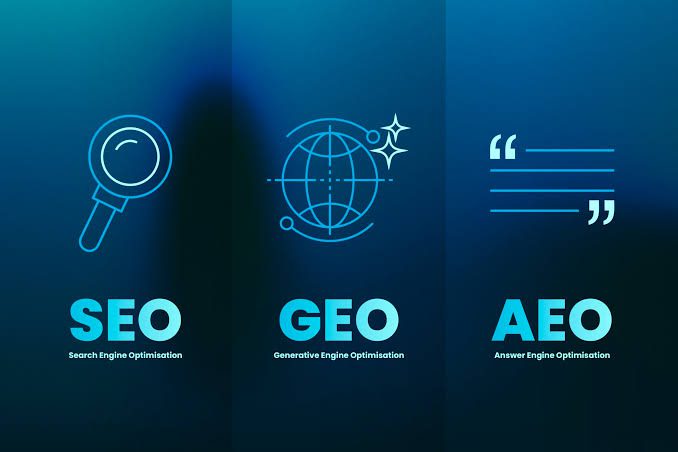
SEO, AEO, and GEO are more closely connect to each other than their names suggest. SEO builds the foundations for search visibility. AEO focuses on answering questions clearly, and GEO focuses on making content useful for AI-generated answers. If you’re a beginner, first learn how to create useful content, make sure your website is easy to access, and understand how to check your results. After that, learn how different search and AI platforms work.
A course brochure may mention SEO, AEO and GEO. However, that doesn’t means you’ll learn three completely different skills. Before joining the course, ask the institute what you’ll actually practise and how the trainer will check your work. In this guide, we’ve explained the difference between these terms and the practical skills you should focus on learning.
IN THIS GUIDE
| The terms compared | A page-review exercise |
| Skills to learn first | Measuring the evidence |
| Google and ChatGPT | Solutions1313 course options |
| Shortcuts to question | Frequently Asked Questions |
SEO, AEO and GEO: A Useful Comparison
SEO stands for Search Engine Optimisation. AEO stands for Answer Engine Optimisation. GEO stands for Generative Engine Optimisation. Google’s guidance on third-party SEO advice mentions these terms, but it also says to check the actual claims behind them instead of simply trusting the labels.
| Term | Main Emphasis | A Useful Beginner Task |
| SEO | Helping people find useful and relevant information on a website through search. | Check the page purpose, content, links, and whether people can access it easily. |
| AEO | Making information clear and useful so it can directly answer people’s questions. | Give a clear and accurate answer with enough information to help people understand it. |
| GEO | Making your content easier for AI search tools to understand and use when they’re creating answers. | Check the evidence, make sure the platform can access the content, and see what the citation actually proves. |
Use this comparison as a general guide, not as three rigid boxes. A well-researched page can also help understand SEO, AEO and GEO better. An answer can be useful even when the AI tool doesn’t mention a business. Also, if it mentions a business, it doesn’t always mean that the business’ website was used as a source.
Using AI to create content is a separate thing. If you use an AI tool to write a draft, it only shows how the content was created. It does not mean that search engines can find the content or that an AI system will use or cite it.
SEO, AEO, and GEO: What Beginners Should Learn First?
If you’re a beginner, begin by learning the basics and practise them on a real page. Don’t focus on collecting tools before you actually understand what problem each tool is supposed to help you solve.
Understand The Reader And The Page
Start with one question and think what information is required to answer it. A person looking for an explanation needs a separate answer from someone comparing courses or looking for a business. Check if an existing page can answer the question before creating or suggesting a new page.
After that, check the page heading, main answer, and supporting information. Remove any claims that cannot be checked or supported. Google’s SEO Starter Guide explains how useful content and clear website can help search engines understand and discover your pages.
Learn To Recognise Access And Structure Problems
Learn the basics of crawling, indexing, internal links, and canonical URLs. You don’t have to change every technical setting by yourself. However, you should be able to find a problem and know when to reach a developer or supervisor for help. When they suggest something, clearly note what you need to check.
You should use clear and useful links between related pages. Google’s link guidance recommends crawlable links and meaningful anchor text. A link should help the reader find the next useful piece of information.
Use our guide to learning SEO without coding to distinguish beginner checks from changes that need developer support.
Keep Evidence And Review Notes
First of all, keep a copy of the original page. Then note down the changes you want to make and the reason for each important change. Now, clearly separate the facts provided by the business from your own suggestions. If you’re using AI to help with the content work, check the information yourself and note down what you changed or corrected. Never use AI answers as proof without checking a reliable source.
Google and ChatGPT: Different Checks
Google and ChatGPT work in different ways, so the checks can be different. For Google’s AI Overviews and AI Mode, a should generally be indexed to appear in Google Search. Google’s AI-features documentation says that normal SEO practises still matter. It also clarifies that you don’t need special AI schema to appear in Google’s AI Overviews and AI Mode results. However, being eligible doesn’t mean that Google will definitely show or use your page in AI answers.
On the other hand, ChatGPT has its own rules for accessing websites. OpenAI uses OAI-SearchBot for ChatGPT Search and GPTBot for potential model-training use. Website owners can allow one and block the other as they both serve different purposes. So, if you’re not sure about these settings, ask your developer to check the website’s access settings and check that the settings match your goals.
Don’t assume that the same AI platform rules apply to all AI tools. Note down which platform or feature you checked. Also, if your page appears in one AI answer, it doesn’t mean it will appear on every AI tool. If you’re able to open a page yourself that doesn’t always mean that a search crawler can access it.
Avoid Shortcuts And Unsupported Promises
You shouldn’t depend on shortcuts or promises that can’t be proved. Google’s generative-AI optimisation guide says that you don’t require an llms.txt file, a special writing style, or very small pieces of content to appear in AI search features. You should focus on writing and organising your content for real readers rather then just rewriting a page only because somebody has claimed that a certain AI formula will improve its visibility.
Never fall for promises such as guaranteed AI citations, fake reviews, or creating many similar pages with little useful information. Google’s spam policies also apply to AI-related search results. Simply calling something an AI optimisation technique does not make it a good or acceptable SEO practice.
Practise With One Page And A Review Record
Use a website page that you own or have permission to work on. Before making any changes to it, save a copy of the original page. Now, make the proposed changes in a draft. This is just a learning exercise.
You can start with a question that the page should answer. After that write a short and clear answer using the information that you’ve checked. At the end, add the important details that the reader needs to understand the answer. Don’t remove an important detail or condition just to make the answer shorter. You should just focus on making the information clear, useful, and accurate.
A Simple Review Process
| Review step | What to record |
| Question and intent | Write down the exact question, who the page is meant for, and why this particular page is the right place to answer that question. |
| Evidence | Note where each important piece of information comes from and clearly mark anything that still needs to be checked or confirmed. |
| Revision | Keep the original wording, the new wording, and the reason for the change. Keep any important limitations or conditions close to the answer so they are not missed. |
| Page checks | Check the headings, make sure the links work, and see how the page looks on a mobile phone. Note any access or technical problems that need to be discussed with a supervisor. |
When you’re working on a course page, clearly mention what students learn in class, any additional training, and actual job or employment terms. Specify the course duration for the exact programme mentioned. Don’t copy a duration from another course or from another location. If you’re not sure about the answer, mark it for confirmation. Don’t fill up the information with a guess or an estimate.
Once, you’re done with the changes, ask someone else to read the revised section without giving them any added explanation. Now, see if they can easily find the answer and understand the important conditions. Keep their feedback and make another revision, if required. This gives you a useful record of what you’ve learned and how you improved the page. It is helpful, even if the page doesn’t yet have any search rankings.
AI can help you compare different drafts. However, you should always check its suggestions yourself. Google’s AI-content guidance focuses on accuracy, quality, and relevance when using AI-generated content. AI-generated citations, made-up results, or incorrect course information should never be treated as evidence.
Measure Visibility Without Inventing Results
Always keep a record of the work you completed separate from the results you actually achieved. A rewritten answer is a deliverable; a search impression is a visibility measure; an enquiry is a different outcome. Completing the work does not automatically mean you received impressions or enquiries.
Google’s Generative AI performance report can show impression data for AI Overviews and AI Mode. It can show information such as the page, date, country, and device. Sometimes, it may not provide a report if the impressions are very less. Always remember, an impression is very different from a click, enquiry, admission, or sale. So, report only those results that you can actually verify.
If you manually check whether an AI tool is using or mentioning a business page, you should keep a clear record of exactly what you check. Mention the question you asked, the platform and feature you used, the date when you performed the check, and the page URL. Save the answer to show it is actually supports the business claim. There’s a difference between a business being mentioned by its name and a website’s link being cited with the answer. Treat each check as an observation.
Website visits should be checked separately. OpenAI’s publisher FAQ explains that ChatGPT referral links can include utm_source=chatgpt.com, which can help identify visits coming from ChatGPT. Use your available website and enquiry data to see what happened after a visit. Do not assume that every AI mention brought visitors to the website.
Explore SEO, AEO and GEO Learning With Solutions1313
Solutions1313 provides website and digital marketing services to its clients and also offers training to its students. Our SEO training covers page improvements, technical foundations, and reporting. Students learn through practical client work under supervision. We teach AEO and GEO alongside SEO.
Explore the below listed location-wise course pages to go through the current syllabus, course duration, and training details.
| Location | Explore The Relevant Learning Page |
| Mohali | SEO course in Mohali |
| Chandigarh | SEO course in Chandigarh |
| Patiala | SEO course in Patiala |
Students who want SEO, advertising, analytics and AI-search topics in one wider programme can also review our digital marketing course in Chandigarh.
Attend the demo class to understand the actual work, not just the terms. In the beginning, just try to explain one change you made and why you made it. Joining a course is very different from getting a job. Paying for a course and completing it does not guarantee a job.
Frequently Asked Questions – SEO, AEO, and GEO
Should I learn SEO before AEO and GEO?
You should start by learning the basics of SEO. Slowly, start learning AEO and GEO along with it. You don’t have to study them separately. First, understand how to make a page useful, clear, accessible, and supported by reliable information. After that, learn how to check and report your results. These basics will help you understand AEO and GEO better instead of only learning different prompts or terms.
Are AEO and GEO completely different from SEO?
No. AEO and GEO are very closely connected to SEO. Both, AEO and GEO focus on making information easy to understand and useful for answer-based and AI search. On the other hand, SEO covers most of the basic things that help a website and its contents to perform well in search. In simple terms, AEO and GEO are not replacements for SEO. Both, the concepts are build on same SEO principles.
Do I need a separate AI version of every article?
No. There’s no need to add a separate version of every article for AI or Google Search. Begin by writing a page for the reader. Make sure the information is clear, useful, and complete. You can also add a question-and-answer section if it helps answer common questions. However, you should not simply repeat the same article with different headings.
Does FAQ schema guarantee an AI citation?
Np. Adding FAQ schema does not necessarily mean that an AI system will cite your page. A clear FAQ section can still be useful because it answers common questions for visitors. As per Google’s documentation updates Google stopped showing FAQ rich results in its Search from 7 May 2026. It only affects how FAQs appear in Google Search. It doesn’t mean you should remove a useful FAQ section from your website.
Can a high SEO-tool score prove that the work is finished?
No. A high score does not mean your SEO work is complete. Google’s guidance on third-party tools explains that those tools can give useful suggestions, but they don’t have access to Google’s internal ranking data. So, they cannot guarantee performance. Use the tool to find possible problems, then check the actual page and the available results. Don’t just focus on getting a high score.
Learn the basic terms first and then use them in real work. Understand the question, improve the page, and explain what your results actually show. This gives you a stronger foundation than trying to follow every new term or trend in search.
Discuss SEO learning with Solutions1313: call +91 92160 41313. Ask about counselling and a demo before choosing a programme.
