

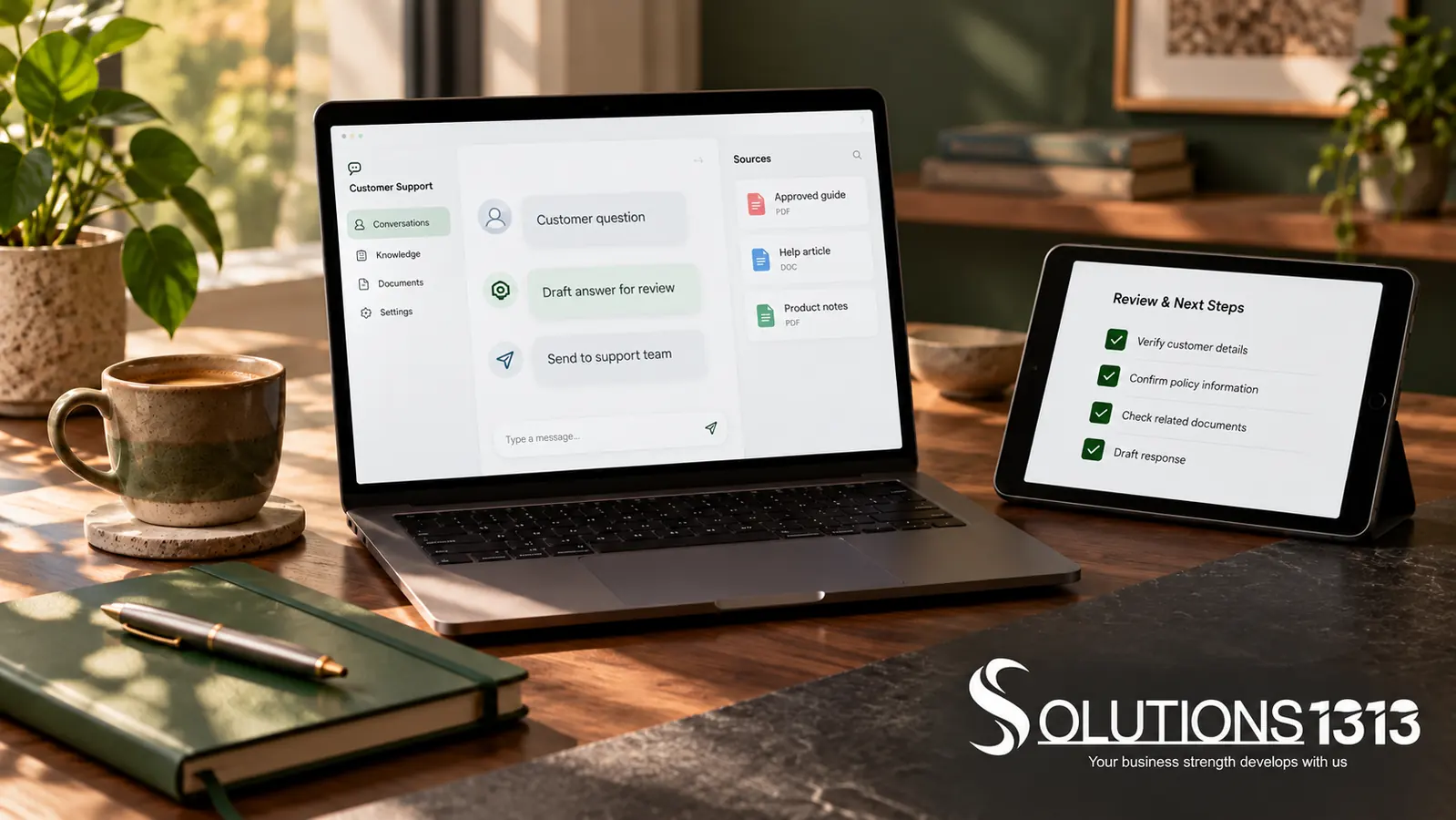
Before adding AI features to business software, first decide what task needs to be done, what information is available, and what could happen if the result is wrong. You should compare AI with simpler options, such as a normal process or a rule-based system. Start a pilot only when the business can measure its results and keep important decisions under proper control.
Simply saying ‘Add AI’ is not enough. Writing a customer support reply, finding information in a company policy, and approving a customer refund are three different tasks. Each of them requires a different level of responsibility. A good proposal should clearly explain what the AI system will do. It should also specify what information it can use and where its responsibility ends. It should also identify which actions need human review or approval.
What problem needs solving?
Explain how the current process works and identify where the staff is wasting time or making avoidable mistakes. You should collect the examples of regular tasks as well as situations where problems may occur. Simply saying that a process needs to be faster or more efficient is not enough for the development team to understand what needs to be improved.
Before you start the pilot, record how much time the current process takes and how often errors occur. Use the same tasks to compare the results after testing. Also, include the time spent checking and correcting the work. Just because AI prepares a first draft faster doesn’t mean the entire task is completed faster.
Questions for AI features in business software
| Question | Evidence to Request |
|---|---|
| What should improve? | A clearly defined task and a measurable result that shows how the improvement will help the business. |
| What information is needed? | A list of approved information sources, details of who is responsible for maintaining them and rules about who can access the information. |
| What can go wrong? | Examples of incorrect answers, possible mistakes, and how they could affect the business or its daily work. |
| Who reviews the output? | A clear process for checking the results, the person responsible for reviewing them and a way to report or escalate problems when required. |
| What is the alternative? | A comparison with simpler options, such as search tools, ready-made templates, rule-based systems or changes to the existing process. |
| When should the pilot stop? | Clear limits for acceptable quality, running costs and behaviour. Also, define which problems or risks would require stopping the pilot. |
Is the source information suitable?
An AI assistant cannot give reliable answers about a company policy if the business has never properly documented it. So, before you choose an AI model, check if the available information is correct, up to date, and complete. Also, look for missing details or different versions of the same document. Assign someone to update and maintain this information after the system is launched.
Decide who should be allowed to access different types of information. For instance, information meant for managers should not be automatically available to every employee or customer. You should include access restrictions when designing and testing the application to make sure users can only view information they are permitted to access.
What authority will the feature have?
You should understand the difference between an AI system suggesting an action and actually carrying it out. For instance, an AI tool that prepares an email needs fewer permissions that the one that can send emails automatically. Similarly, a customer support assistant may help answer questions but should not automatically have permission to change customer account balances.
OWASP’s guidance on excessive agency explains the risks of giving AI systems too many features, permissions or the freedom to act without proper checks.
Give the AI system only the access it needs to perform its assigned task. Keep all the important actions under suitable human review and approval. It can be sending messages, changing customer records, or approving transactions, under suitable human review and approval.
How will the business judge the pilot?
Prepare a list of real-life questions and situations before testing the AI system. Include incomplete requests, documents with conflicting information, questions the system cannot answer and cases that need human support. Keep a record of which answers pass or fail and why.
Ask staff who understand the work to review the AI-generated results. A well-written answer does not always mean it is correct. You should check if the system uses the right information, follows user access permissions, and clearly identifies when it is unsure.
The NIST AI Risk Management Framework provides voluntary guidance for identifying and managing risks at different stages of an AI system’s development and use. However, it is not a product certificate and does not replace testing the system in your own business environment.
What will it cost to operate?
Consider all the costs involved, including AI model usage, document preparation, system integration, monitoring and staff review. Ask the team how costs may change when users make repeated requests, upload long documents, or when the system fails and needs another attempt. Set limits on usage and decide who will receive alerts if something goes wrong.
Also, think about an alternative way to complete the work if the AI feature stops working. Staff should still be able to handle the task manually when required. A pilot should help you understand if the system provides real value even when errors, delays, or interruptions occur.
Frequently Asked Questions
Does every business application need AI?
No. Not every business problem needs an AI solution. Sometimes, a simple search feature, ready-made template or role-based process can do the job more easily. Choose the solution that meets your business needs without adding unnecessary cost or complexity.
Can a successful demonstration justify a full rollout?
A successful demo is a good starting point. However it does not guarantee that the system is ready for everyday business use. Before expanding it, test different types of tasks, check user permissions, see how it handles errors, and review ongoing costs. This helps ensure the system works reliably in real business situations.
Should AI make final business decisions?
Decide how much authority AI should have based on the task and its possible impact. Just because AI can suggest a suitable answer or recommendation doesn’t mean it should be allowed to make the final decision or take action on its own. For important decisions, human review and approval may still be necessary.
Start with one defined use case
Take one specific business process, relevant sample documents, and clear goals to Solutions1313’s AI application development discussion. Discuss a small pilot project first and decide how its results will be checked before expanding it to other business processes.
