

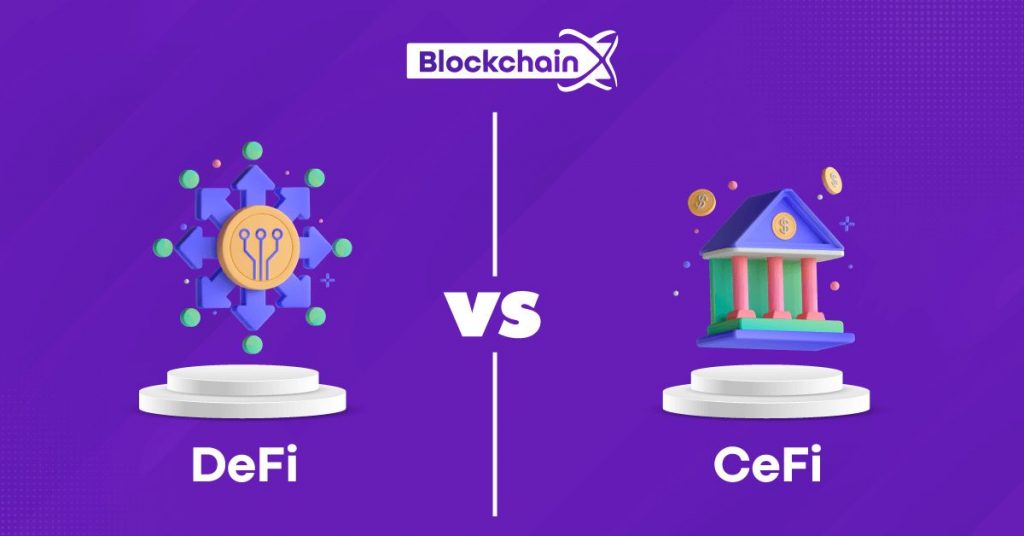
DeFi vs CeFi: The Difference Explained
The difference between DeFi vs CeFi matters practically for Indian crypto users and businesses. CoinDCX and WazirX are CeFi — they hold your funds, verify your identity, and can freeze your account. Uniswap and Aave are DeFi — your funds stay in your wallet, no identity verification, no one can freeze anything. Both models have legitimate uses. The CeFi model is familiar and has account recovery. The DeFi model is trustless and non-custodial. Understanding which one to build on — or use — depends on your specific requirements, not ideology.
📍 6 Offices: Mohali HQ + 5 India Branches + Dubai, Business Bay ✅ Free Consultation ✅ Free Project Roadmap
What CeFi (Centralized Finance) Actually Is
In crypto, CeFi means centralized crypto platforms — exchanges like WazirX, CoinDCX, and Binance that hold user funds in custodial wallets. They set the rules, can freeze accounts, require KYC, and have customer service. They also carry counterparty risk — as Indian users discovered with the FTX collapse, when a CeFi platform fails, user funds may be at risk.
What DeFi (Decentralized Finance) Actually Is
DeFi runs on smart contracts. No company holds your funds — they stay in your wallet. Protocols execute automatically based on code, not company decisions. Anyone with a wallet can participate, globally, without identity verification. The rules are encoded in contracts that neither the developer nor anyone else can unilaterally change after deployment.
DeFi vs CeFi: Where Each Model Wins
On one hand, CeFi wins on user experience, account recovery, regulatory compliance, and fiat integration. For instance, an Indian grandmother using crypto for the first time needs CeFi — it works like a bank. On the other hand, DeFi wins on non-custodial security, censorship resistance, permissionless access, and composability with other protocols. Meanwhile, a DeFi developer who wants to build a lending protocol that automatically integrates with Uniswap and Aave needs DeFi infrastructure.
What Solutions1313 Has Observed in the Indian Market
Most Indian retail crypto users are on CeFi platforms because the UX is familiar. The DeFi user base in India is growing but remains technically sophisticated. For businesses building products, the choice between CeFi and DeFi architecture determines your regulatory exposure, your user acquisition strategy, and your product’s security model. We help clients make this decision accurately during the free consultation.
Written by
Damanpreet Kaur
Solutions1313 | Mohali, Chandigarh (HQ) | 5 India Branches | Dubai — Business Bay | Free Consultation | Free Project Roadmap
Need a Blockchain Development Partner?
Solutions1313 — 6 offices across India and Dubai Business Bay. Free consultation and free project roadmap for every inquiry. We offer comprehensive blockchain solutions including DeFi Platform Development India, Crypto Exchange Development India, Smart Contract Development India, and Blockchain Development Company India.
